
(910) 793-9000
(910) 793-9000
5725-F2 Oleander Drive
Wilmington, NC 28403
 

Collins Law Firm :: Blog

Browsing Post with the Tag: dmv

Contactless Road Test

Monday, February 22nd, 2021
After the passing of House Bill 158 on June 19, 2020, temporarily waiving the road test requirement for level two limited provisional licenses, North Carolina Division of Motor Vehicles (NCDMV) started to offer road tests to teen drivers again.

House Bill 158 did not address 16- or 17-year-olds seeking a full provisional license – Teen Driver Level 3.  In order to advance to Teen Driver Level 3, one needs to pass a road test.   

NCDMV now offers modified contactless road tests at limited locations by appointment for Level 2 drivers that have received a waiver and now need a road test to advance to Level 3, as well for other qualifying reasons such as: 

  • One previously failed a road test and was never retested prior to March 2020;
  • Governed by lawful and or legal presence status (not permanent residence);
  • Driving privileges were suspended when the previous credential expired;

The road tests developed by NCDMV are now contactless and are held in large parking lots.  This way, the license examiner does not need to sit in the car with the driver. However, only 14 out of 115 driver license offices are equipped to offer these contactless road tests. Also, while one can schedule appointments with the NCDMV online, this option does not currently exist for limited provisional licensees wanting to advance to Level 3.   Due to the limited space for contactless road tests, it may take weeks before one can get an appointment.  You may apply for an appointment by contacting NCDMV by phone at (919) 715-7000, or by email via DMVDS@ncdot.gov.  If you email NCDMV in order to apply for a contactless road test, please include your name, county of residence, driver license or permit number, phone number, and the reason qualifying you to take the contactless road test, i.e. level 2 driver wanting to advance, or previously failed road test, etc.

Please make sure to obey by the strict restrictions for your level of teen driving in order to be able to gain the on-the-road experience necessary to drive a vehicle with no supervision and minimal restrictions, and in order to avoid traffic tickets which may be costly.

However, if you find yourself in need of an attorney because were charged with a traffic violation or crime in New Hanover, Pender, or Brunswick Counties, call Collins Law Firm at (910) 793-9000 for a confidential consultation about how we can help you.

By Jana H. Collins
Improper Equipment vs. PJC and more

Thursday, September 25th, 2014

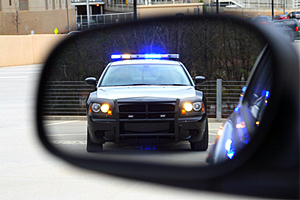
A traffic ticket can cause a lot of headache.  It starts with embarrassment when the blue lights come up in your rear view mirror and when you have to sit on the side of the road while the officer investigates and issues your ticket and it continues far beyond.  If you receive a traffic ticket, you should consult with an attorney on how to best handle your ticket.
After consulting with an attorney you may come to the crossroads where you have to choose to have your speeding ticket reduced to an Improper Equipment or to request a Prayer for Judgment Continued (PJC).

An improper equipment is a non-moving violation that carries no points with the North Carolina Division of Motor Vehicle (NC DMV) and no insurance points.

It is possible to be charged with Improper Equipment, if there is actually something wrong with your vehicle.  Upon proof of the underlying deficiency of your vehicle being repaired, most Improper Equipment charges result in a dismissal.

A plea of responsible to operation of a vehicle with improper equipment in violation of N.C.G.S. §20-123.2 does not mean that there was something wrong with your vehicle, the North Carolina legislature specifically addressed the issue of improper equipment plea negotiations by making it a lesser included offense for most speeding violations N.C.G.S. §20-141 (o).  Pursuant to N.C.G.S. §20-141 (o) (2) however, an Improper Equipment plea shall not apply to charges of speeding in excess of 25 miles per hour or more over the posted speed limit.  Pursuant to N.C.G.S. §7A-304 (a) (4b) a defendant must pay an additional amount of $50 for all offenses arising under Chapter 20 of the General Statutes and resulting in a conviction of an improper equipment offense.

In some counties, such as New Hanover and Pender County, you are generally not allowed to get a Chapter 20 offense amended to an improper equipment more than once within a three year period without prior completion of a safe driving class.  If a defendant however already received an improper equipment plea and also already attended a safe driving class or if the defendant does not want to attend a safe driving class, then different options can be explored.  One of these options only applicable to speeding charges is a reduction of the speed, most commonly a reduction to less than ten over the posted speed limit. While a reduction to less than ten over the posted speed limit will appear on your driving record, it should not affect your North Carolina insurance premiums as long as the violation did not occur in a school zone or there is not another traffic moving violation within a three year period.

Another option of disposing of a traffic ticket pursuant to N.C.G.S. §15A-1381 (9) is a Prayer for Judgment Continued, or PJC – an entry of a plea of guilty or no contest pursuant to G.S. 15A-1011, without regard to the sentence imposed upon the plea. The PJC is unique to North Carolina Law.  If the PJC is granted, the offense is not entered against the defendant and no fines are assessed in addition to the court costs.  However, pursuant to N.C.G.S. §20-141 (p) a driver charged with speeding in excess of 25 miles per hour over the posted speed limit is not eligible for a PJC.  Also, defenders who hold an active Commercial Driver’s License (CDL) or who were driving a commercial vehicle when they were charged, cannot receive a PJC without it effecting their driving record because NC DMV does not recognized a PJC in such instances and would record a conviction of the underlying charge instead.

Both the NC DMV and Insurance Companies have their own policies regarding PJCs. Currently, the NC DMV will recognize two PJCs per driver every 5 years. If you plead guilty and are granted a third PJC within that 5 year period, DMV will not recognize it and the underlying conviction will affect you just like any other guilty plea. Also, Insurance Companies will recognize only one PJC every 3 years per household – a second PJC per household may cause insurance points to be charged according to the underlying conviction.

We generally advise our clients to save their PJCs. However, each defense in traffic matters is unique and needs to be analyzed to determine what the best possible disposition would be.

If you or someone you know is received a traffic ticket in Southeastern North Carolina, then call the experienced team at Collins Law Firm for a confidential consultation at:  910-793-9000.

By Jana H. Collins

Texting While Driving

Wednesday, December 12th, 2012

Over the past twenty years, cell phones have become an essential part of day to day life for many Americans. Cell phones continue to provide us with the convenience to communicate while on the go, comfort in knowing we have a way to call for help in case of an emergency, and access to music, games and entertainment.  Cell phones can make life easier, but when used irresponsibly, can have disastrous consequences.
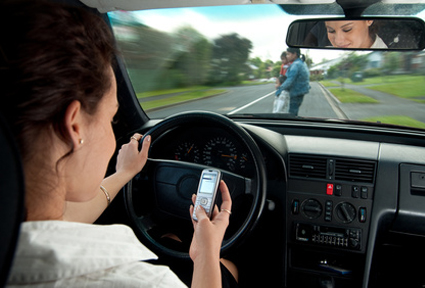
Answering a text takes away your attention for about five second. That is enough time to travel the length of a football field. We know it is dangerous, but many of us continue to send or receive text messages while driving thinking that nothing will happen to them. But according to the National Highway Traffic Safety Administration, text messaging while driving makes a car crash 23 times more likely and 1.3 million auto collisions involved cell phones last year.

Unfortunately, about 6,000 deaths and about 500,000 injuries are caused by distracted drivers every year.  In response to the rapid increase in texting while driving fatalities, 39 states, including North Carolina have passed laws prohibiting all drivers from texting while driving. Texting while driving is a violation of the North Carolina General Statute §20-137.4A.

N.C.G.S. §20-137.4A Unlawful use of mobile telephone for text messaging or electronic mail
(a) Offense. – It shall be unlawful for any person to operate a vehicle on a public street or highway or public vehicular area while using a mobile telephone to:
(1) Manually enter multiple letters or text in the device as a means of communicating with another person; or
(2) Read any electronic mail or text message transmitted to the device or stored within the device, provided that this prohibition shall not apply to any name or number stored in the device nor to any caller identification information.
(b) Exceptions. – The provisions of this section shall not apply to:
(1) The operator of a vehicle that is lawfully parked or stopped.
(2) Any of the following while in the performance of their official duties: a law enforcement officer; a member of a fire department; or the operator of a public or private ambulance.
(3) The use of factory-installed or aftermarket global positioning systems (GPS) or wireless communications devices used to transmit or receive data as part of a digital dispatch system.
(4) The use of voice operated technology.
(c) Penalty. – A violation of this section while operating a school bus, as defined in G.S. 20-137.4(a)(4), shall be a Class 2 misdemeanor and shall be punishable by a fine of not less than one hundred dollars ($100.00). Any other violation of this section shall be an infraction and shall be punishable by a fine of one hundred dollars ($100.00) and the costs of court.

A texting while driving charge will not cause you to receive any drivers license points or insurance surcharges, however the charge will appear on your North Carolina DMV record unless you are able to have the charge dismissed. If you or someone you know has received a ticket for texting while driving, call Collins Law Firm for a free consultation at 910-793-9000910-793-9000.

By Lauren Seidel, Paralegal

Out of State Speeding Tickets

Monday, August 23rd, 2010

If you get a speeding ticket outside of North Carolina as a North Carolina licensed driver and just pay it off, it could cause your license here to be revoked.   Because of the Interstate Driver License Compact, the vast majority of states exchange information for moving convictions in motor vehicles.  If you get a speeding ticket in a member state for speeding more than 15 miles per hour over the speed limit, and the speed at which you are charged to have been speeding is 55 miles per hour or more, your license in North Carolina will very likely be revoked.   Similarly, if you are charged with speeding more than ten miles per hour over the speed limit in a 70 mile per hour zone or higher, your license in North Carolina will very likely be revoked.

Once the NC Department of Motor Vehicles gets notification of such a conviction, the NC licensed driver will be sent notification of the pending revocation and given notice of the right to have a hearing.  If the DMV hearing is not requested properly within the time frame allowed for such a request, the revocation will go into effect and it will no longer be possible to request a hearing.

If you have received such a notice, Collins Law Firm can help.   Give us a call at (910) 793-9000(910) 793-9000 to discuss the details.