
Self Initiated Warrants in North Carolina
Monday, March 26th, 2012 North Carolina General Statute Section § 15A-304 provides that: A judicial official may issue a warrant for arrest only when he is supplied with sufficient information, supported by oath or affirmation, to make an independent judgment that there is probable cause to believe that a crime has been committed and that the person to be arrested committed it. The information must be shown by one or more of the following: Affidavit; Oral testimony under oath or affirmation before the issuing official, etc.
Just because someone swears out a warrant against a person does not mean the person is guilty. In each of the United States, everyone is presumed innocent until proven guilty in a court of law. Criminal charges, even if dismissed in court, can result in criminal records which will affect the accused for the rest of their life. Even if the criminal records are expunged, it is possible that records may still exist of the charges.
Recently, the Wilmington Star News (the main newspaper in New Hanover County, NC) ran a story on North Carolina’s laws on self initiated warrants. The story commented on several high profile cases including the recent warrant that Belville Mayor Jack Batson took out on Belville Commissioner Joe Breault for communicating threats and cyberstalking. Commissioner Breault had allegedly written an email to Mayer Batson in which he said that if he got out of hand again, “you may likely find your words rammed back down your throat and, along with your new teeth, pulled out of your rectum!” The article said Batson indicated that he felt compelled to swear out a warrant against Breault since the threats were escalating, but Breault the agreed that the system with self initiated warrants in North Carolina is abused. He said specifically that he has examples of instances where young people threaten to have their lovers arrested if they misbehave.
In 2003, a Kure Beach resident swore out a warrant against actor Ben Affleck for communicating threats. The warrant was subsequently dismissed. The District Attorney at the time said that the case was “a very good example of why people shouldn’t be able to take out a warrant without any kind of police investigation.”
The Star News article discussed the processes in other states including Georgia where individuals requesting a warrant must go before a magistrate who holds a hearing where both the accuser and accused are given a chance to present evidence before the judicial officer makes a decision. What followed was the standard three-step process that unfolds thousands of times each year in magistrates’ offices across North Carolina: Batson filled out a one-page form, listing his complaint. He put his hand on a Bible, swearing his claims were true. And then, the magistrate issued a warrant for the commissioner’s arrest.
In the vast majority of other states, there are other professionals involved in the criminal justice system investigating criminal complaints before a warrant is issued. The Star news quoted Jeffrey Welty, Assistant Professor at the UNC School of Government who has said: It’s a distinctive feature of North Carolina law. . . . I haven’t surveyed all 50 states, but if we’re not unique, we’re pretty close.
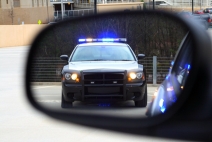 We would like to offer some advice on what to do if you are stopped by a law enforcement officer while driving a motor vehicle.