
NC State Highway Patrol’s Move Over Campaign
Wednesday, July 29th, 2020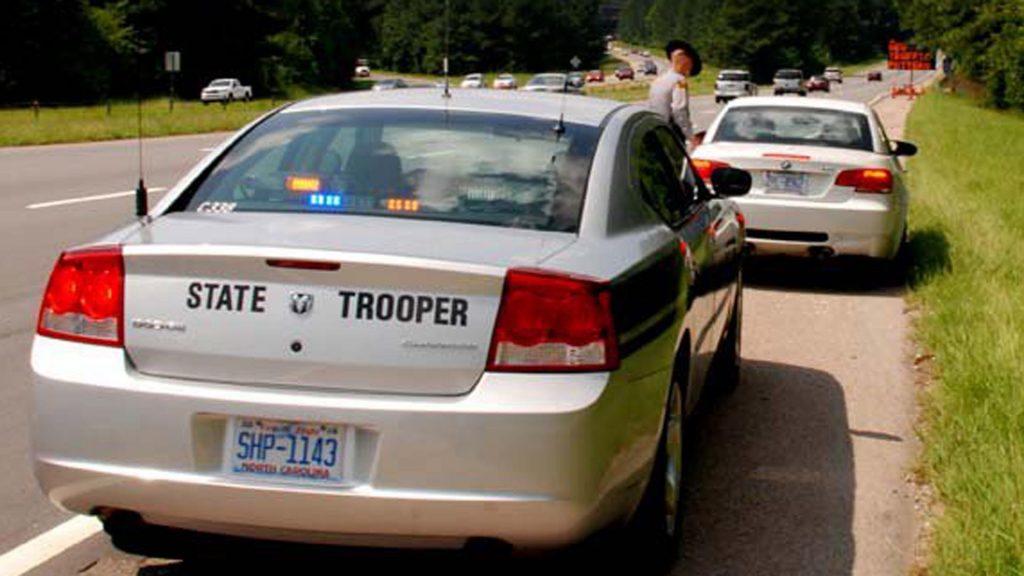
Just recently, since June 6, 2020, six troopers have been sent to the hospital with a range of injuries due to separate collisions in which other motorists struck Highway Patrol vehicles. The failure to obey by the move over laws of our State contributed to five our of these six incidents. On Monday, July 27, 2020, the North Carolina State Highway Patrol launched their Move Over Campaign to gain compliance with the Move Over laws by motorists in an attempt to prevent future collisions.
Often, drivers appear to be unsure about what they are expected or required to do. Therefore, please make sure to become familiar with these laws, and protect those who risk their lives to protect us:
Upon the approach of an emergency vehicle “giving warning signal by appropriate light and by audible bell, siren or exhaust whistle, audible under normal conditions from a distance not less than 1000 feet”, North Carolina General Statue (N.C.G.S.) §20-157(a) provides that “the driver of every other vehicle shall immediately drive the same to a position as near as possible and parallel to the right-hand edge or curb, clear of any intersection of streets or highways, and shall stop and remain in such position unless otherwise directed by a law enforcement or traffic officer until the law enforcement or fire department vehicle, or … shall have passed. Provided, however, this subsection shall not apply to vehicles traveling in the opposite direction of the vehicles herein enumerated when traveling on a four-lane limited access highway with a median divider dividing the highway for vehicles traveling in opposite directions, and provided further that the violation of this subsection shall be negligence per se. Violation of this subsection is a Class 2 misdemeanor.”
With respect to fire apparatuses, N.C.G.S. §20-157 provides in subsections (b), (c), and (d) that it is unlawful to follow too closely when it is traveling in response to a fire alarm, to park too close to where a fire apparatus has stopped to answer an alarm, or to drive a motor vehicle over or block a fire hose or any other equipment being used at a fire.
When an authorized emergency vehicle is parked or standing within 12 feet of a roadway and is giving a warning signal by appropriate light, N.C.G.S. $20-157(f) provides that:
- Move the vehicle into a lane that is not the lane nearest the parked or standing authorized emergency vehicle or public service vehicle and continue traveling in that lane until safely clear of the authorized emergency vehicle. This paragraph applies only if the roadway has at least two lanes for traffic proceeding in the direction of the approaching vehicle and if the approaching vehicle may change lanes safely and without interfering with any vehicular traffic.
- Slow the vehicle, maintaining a safe speed for traffic conditions, and operate the vehicle at a reduced speed and be prepared to stop until completely past the authorized emergency vehicle or public service vehicle. This paragraph applies only if the roadway has only one lane for traffic proceeding in the direction of the approaching vehicle or if the approaching vehicle may not change lanes safely and without interfering with any vehicular traffic.
With the amendment of N.C.G.S. §20-157 effective December 1, 2019, the penalty for those who violate the State’s Move Over Law causing serious injury or death by violating this section have increased—a violation resulting in damage to property or injury to a law enforcement officer or emergency response person is now a Class 1 misdemeanor pursuant to N.C.G.S. §20-157(h), which carries a maximum punishment of 120 days; a violation resulting in serious injury or death to a law enforcement officer or emergency response person is now a Class I felony pursuant to N.C.G.S. §20-157(i), which carries a maximum punishment of 24 months.
Be attentive and considerate and obey by the laws governing the use of our roadways in order to protect lives and save yourself the headache of facing charges, court costs, fines, and potential insurance increases. However, should you receive a traffic ticket in New Hanover, Pender, or Brunswick County, call Collins Law Firm at 910-793-9000 for a confidential consultation. We are here to help!
By Jana H. Collins, Office Manager

 It happens so easily—one makes a bad choice, gets misunderstood, or falsely accused, and in the result faces criminal charges. Regardless of the outcome in a criminal matter—even in case of a wrongful criminal charge—the fact that one was criminally charged will result in a criminal record. Unless dealt with appropriately, a criminal record may create a virtuous circle and negatively affect one’s chances in the job market, in college applications, on the housing market, etc. In an attempt to mitigate or avoid negative consequences of one’s criminal record, one should consult with an attorney about whether or not they are eligible for an expunction of their criminal record and if eligible, pursue the expunction.
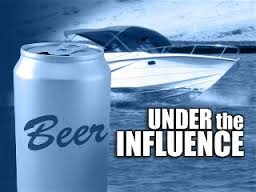 The Wrightsville Beach 32nd annual North Carolina Holiday Flotilla is upon us! Many Wilmingtonians look forward to this water-based event every Thanksgiving weekend, as family and friends come together to eat, drink, and celebrate the holiday together. Whether you have a boat entered in the contest or will be watching from land, it may be beneficial for you to be up-to-date on North Carolina’s laws against Boating While Impaired, commonly referred to as “BUI” or “BWI”.
 Generally, the fact that one was charged with a crime remains on their record regardless of the disposition of the charge, unless the charge gets expunged. An expungement in North Carolina is the eradication of one’s criminal record by court order. The effects of an expunction or expungement are outlined in N.C.G.S. § 15A-153 and include that upon expunction one may truthfully and without committing perjury or false statement deny or refuse to acknowledge that the criminal incident occurred.
 In just a few weeks a new law will be going into effect in North Carolina called “The Hassani N. Wesley Students’ School Bus Safety Act.” This act was passed earlier this year, but is scheduled to come into effect on December 1st, 2013. This bill will ultimately create harsher penalties for North Carolina drivers who illegally pass school buses.

 On August 12, 2013, United States Attorney General Eric Holder announced to the American Bar Association’s House of Delegates in San Francisco, an initiative to curb mandatory minimum drug sentences that the nation is “coldly efficient in jailing criminals,” but it “cannot prosecute or incarcerate” into becoming a safer country. “Too many Americans go to too many prisons for far too long, and for no truly good law enforcement reason,” Holder said . The arguments about legalization of drugs in the US include health and social problems, potential tax revenue, and public safety concerns. However, this speech by our Attorney General focused on alleviating an overburdened prison system housing non-violent people convicted and sentenced to very long prison terms for peaceful drug crimes. Regarding the debate over legalization, the nation has moved from the question of “if” to the more tangible question of “how,” said Beau Kilmer, co-director of the RAND Drug Policy Research Center and co-author of “Marijuana Legalization: What Everyone Needs to Know.”