
Mandatory Water Restrictions
Friday, October 21st, 2016 Brunswick, New Hanover, and Pender counties are all experiencing mandatory water restrictions that were put into place on October 13th due to a pipe break in Riegelwood. The Lower Cape Fear Water and Sewer Authority’s pipe supplies water to utilities to all three of these counties. This pipe break is affecting areas such as Wrightsville Beach, Carolina Beach, Kure Beach, Leland, Wilmington, etc.
The break in the 48-inch pipe is nearly the size of a football and that break alone is causing 12.5 million gallons of raw water to spill through it daily.
One of the main reasons that Brunswick County has declared a state of emergency and is pleading with public water customers to reduce water usage is to be sure there is enough water for emergency needs such as firefighting efforts and hospital uses.
Here are a few tips on how to help conserve water:
- Limit your shower time
- Turn off water when not directly using while brushing teeth, washing hands, washing dishes, etc.
- Only run dishwashers or washing machines when you have a completely full load
- Limit the number of times you flush the toilet daily
The water flow from Kings Bluff Pump has been cut in half by the break, going from about 24 million gallons of water flow a day to nearly 12 million gallons of water a day. A temporary patch would be ideal in this situation, but they were not able to successfully patch it when attempting to on Wednesday morning.
Since the patch was unsuccessful, crews began constructing a temporary bypass on Thursday morning so that water would go around the break and allow it to keep flowing until the break itself is repaired. This project is expected to be completed sometime next week. The main delay in this repair is that the surrounding counties do not have parts that this break is requiring to fix, so they are waiting on parts to be flown in from other parts of the country.
Car washes have made attempts to save water by reducing their number of open hours each day and the city of Wilmington is holding back on street sweeping and power washing in some areas until the pipe is repaired. If you do see areas throughout the city using their irrigation systems still during this mandatory water restriction, it may be because their water comes from a pond.
Brunswick County Emergency Services are preparing for the worst and are there to help you if needed. They have 480,000 gallons of bottled water on hand, which is equivalent to four days worth of water for residents. Please be safe and make sure you follow all mandatory water restrictions in your area!
By Kimberlin S. Murray, Legal Assistant at Collins Law Firm
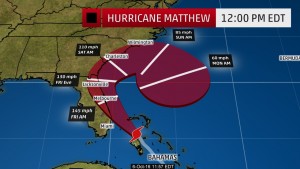 North Carolina residents have been keeping a close eye on Hurricane Matthew this past week. On Monday, Governor Pat McCrory issued a state of emergency for 66 North Carolina counties, including New Hanover County, Brunswick County, and Pender County. This hurricane was supposed to directly hit the coast, but the latest forecast track shows that this powerful storm is expected to make a sharp turn to the east as it nears the North Carolina Coast. This sharp turn is caused by an upper level trough which will move towards the eastern United States and force the hurricane away from moving up the east coast. It will also likely weaken into a Category 1 hurricane by this point.
 The National Center for Statistics and Analysis reports that approximately 1200 are injured and about 8 are killed every day in the U.S. in car accidents involving a driver who has been distracted. Drivers can be distracted by activities such as texting; eating and drinking; talking to passengers; grooming; using in-vehicle technology; etc.
 With an expected crowd of 20,000 flocking to Wrightsville Beach and neighboring hot spot Masonboro Island this July 4th weekend, local law enforcement are going to be increasing their presence as well. This year will see the cooperation of multiple law enforcement agencies working to ensure the safety of beachgoers and boaters alike. The Wrightsville Beach Coast Guard Station at the island’s south end will be the site of an incident command center operated by a joint force of Wrightsville Beach police officers and deputies from the New Hanover County Sherriff’s office, tasked with covering both the Wrightsville beachfront and Masonboro Island. Along with keeping an eye out for underage drinking and disruptive behavior, officers will also be seeking to target illegal water taxi service, for which fines can range up to $10,000 for captains ferrying without certification.
 The FBI is now more serious than ever about animal cruelty and the consequences associated against these crimes. As of January 1st of this year, the FBI will now collect data on animal cruelty crime through the National Incident-Based Reporting System (NIBRS). Animal cruelty will be classified as a Class A felony, treated as crimes such as homicide, arson, and assault. There will be four categories in which animal abuse crimes can be filed: simple or gross neglect, intentional abuse and torture, organized abuse (i.e., dog fighting), and animal sexual abuse.
 The medical marijuana movement – a new provision! As found in Congress’ new 1,603-page spending plan, federal agents are now banned from policing medical marijuana users and raiding dispensaries in any state where medical marijuana is legal. Though the media has been hesitant to broadcast this news, you can be assured that this will change the way America sees and treats medical marijuana – and ultimately signals a big shift in drug policy. After two decades of tension and controversy between Washington and the states regarding medical marijuana, the passage of this bill marks a victory for so many. The origin of the movement towards federal legalization of medical marijuana can be linked to the many organizations advocating for federally legalized marijuana such as the Americans for Safe Access, the National Organization for the Reform of Marijuana Laws, and the Marijuana Policy Project. The Drug Enforcement Administration (DEA) however is not so thrilled, still arguing that marijuana is in the category of most dangerous narcotics, with no exception to medical use. The legalization of medical marijuana began in the 1990’s and now 23 states and the District of Columbia have legalized it.
 Happy 2016! As of January 1, 2016, 23 new laws will take effect in North Carolina – five of which could impact your daily life, and here they are:
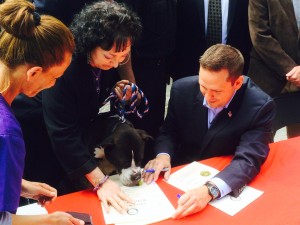 Orange County, NY Legislator Mike Anagnostakis (R-Montgomery, Newburgh) was elated when law he had proposed─Rocky’s Law─was voted unanimously and thereby approved by Orange County, NY Legislators. Pursuant to Rocky’s Law, Orange County Residents convicted of abusing animals are required to register within five days of being convicted or released from jail or prison. Failure to register may result in a fine of up to $2,000 and a year in jail. First time offenders will be prohibited from owning a companion animal for 15 years, and repeat offenders will be barred from owning a companion animal for the rest of their life.
 Kelly Gissendaner was executed on Wednesday at 7pm, with respect to her sentence of the death penalty for engineering the murder of her husband in 1997, despite both her children and even Pope Carlo Francis’ wishes. After visiting the United States, the pope sincerely requested in writing that the state of Georgia not follow through with the execution of Ms. Gissendander as stated below:
 As a prelude to this text, please keep in mind that we are referencing DWIs currently eligible for expunction (i.e., those convicted of a DWI that were released from supervision 15 or more years ago) under N.C.G.S. § 15A-145.5.