
Put down that mobile phone!
February 15th, 2016 According N.C.G.S. § 20-137.4., it is unlawful for any person to drive a motor vehicle while using his or her mobile telephone to text or email, with just a few exceptions as follows: if the driver is parked or stopped, if the means of communication are required for law enforcement to fulfill their duty/duties, for the use of factory-installed or GPS systems, or with the use of voice technology. Everyone knows that texting while driving is illegal, much thanks to the many preventative texting while driving campaigns have launched nationally such as “It Can Wait, “ and the “Safe Texting Campaign.” But what about all of the other distractions that put drivers at risk, like taking selfies, Instagramming, and Facebook? Although just as distracting and fatal, these types of behaviors are rarely reprimanded by law enforcement officers because there are no clear cut statutes that define these violations.
Realistically, as long as humans operate vehicles, there will be distractions, and especially as technology advances. Virginia is currently making an effort to crack down on the use of mobile phones while driving. Last week a legislative panel in VA approved a bill that bans drivers from “manually selecting multiple icons or enter multiple letters or text in [a handheld personal communications device].” The ban also eliminates entry of icons be used as “means of communicating with another person,” and finally to “read any information displayed on the device.”
Regulating mobile phone use by drivers, although, is really a tough job for legislatures. Think about it, every time a new law is presented, by the time it becomes effective software developers have a new program or app that is more popular anyway, often making the old law meaningless. Consider the Virginia plan above, for instance. Where’s the rule on taking selfies while driving?
14 states have outlawed the use of handheld devices while operating a motor vehicle all together, leaving a lot of gray area for the 36 other about what you can do with your phone while driving. An interesting idea maybe North Carolina should consider – what about expanding the Careless and Reckless statute to include making any and all distracting behavior citable?
By Amber Younce, Legal Assistant
 The medical marijuana movement – a new provision! As found in Congress’ new 1,603-page spending plan, federal agents are now banned from policing medical marijuana users and raiding dispensaries in any state where medical marijuana is legal. Though the media has been hesitant to broadcast this news, you can be assured that this will change the way America sees and treats medical marijuana – and ultimately signals a big shift in drug policy. After two decades of tension and controversy between Washington and the states regarding medical marijuana, the passage of this bill marks a victory for so many. The origin of the movement towards federal legalization of medical marijuana can be linked to the many organizations advocating for federally legalized marijuana such as the Americans for Safe Access, the National Organization for the Reform of Marijuana Laws, and the Marijuana Policy Project. The Drug Enforcement Administration (DEA) however is not so thrilled, still arguing that marijuana is in the category of most dangerous narcotics, with no exception to medical use. The legalization of medical marijuana began in the 1990’s and now 23 states and the District of Columbia have legalized it.
 Happy 2016! As of January 1, 2016, 23 new laws will take effect in North Carolina – five of which could impact your daily life, and here they are:
 The resentment towards police departments by community activists who have portrayed law enforcement as racist who routinely shoot black Americans, for essentially no reason, has caused a substantial increase in shootings and murders all across the United States in recent years. This idea has become what is known as “The Ferguson Effect.”
 So often we hear about how overcrowded and dangerous United States jails are, and naturally, with that, safekeeping becomes more and more difficult for jail staff as the problem increases. How does jail staff maintain a safe environment for the inmates? Or even more interesting, what is staff to do when an individual inmate becomes unmanageable by behavior, illness, or vulnerability? The answer is pretty straightforward but the process is complicated. In this type of situation, jail staff submits a transfer request in hopes to have the inmate transferred from jail to the state prison, through what is known as a safekeeping order. Pursuant to G.S. 162-39, “the resident judge of the superior court or any judge holding superior court in the district or any district court judge may order the prisoner transferred to a fit and secure jail in some other county where the prisoner shall be held for such length of time as the judge may direct,” under the following circumstances (where the prisoner):
 The Wrightsville Beach 32nd annual North Carolina Holiday Flotilla is upon us! Many Wilmingtonians look forward to this water-based event every Thanksgiving weekend, as family and friends come together to eat, drink, and celebrate the holiday together. Whether you have a boat entered in the contest or will be watching from land, it may be beneficial for you to be up-to-date on North Carolina’s laws against Boating While Impaired, commonly referred to as “BUI” or “BWI”.
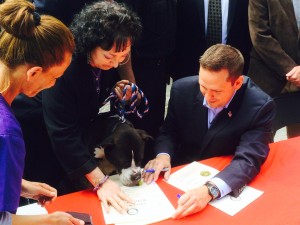 Orange County, NY Legislator Mike Anagnostakis (R-Montgomery, Newburgh) was elated when law he had proposed─Rocky’s Law─was voted unanimously and thereby approved by Orange County, NY Legislators. Pursuant to Rocky’s Law, Orange County Residents convicted of abusing animals are required to register within five days of being convicted or released from jail or prison. Failure to register may result in a fine of up to $2,000 and a year in jail. First time offenders will be prohibited from owning a companion animal for 15 years, and repeat offenders will be barred from owning a companion animal for the rest of their life.
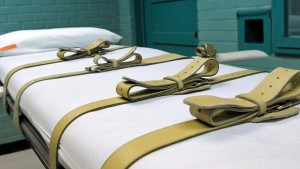 Kelly Gissendaner was executed on Wednesday at 7pm, with respect to her sentence of the death penalty for engineering the murder of her husband in 1997, despite both her children and even Pope Carlo Francis’ wishes. After visiting the United States, the pope sincerely requested in writing that the state of Georgia not follow through with the execution of Ms. Gissendander as stated below:
 As a prelude to this text, please keep in mind that we are referencing DWIs currently eligible for expunction (i.e., those convicted of a DWI that were released from supervision 15 or more years ago) under N.C.G.S. § 15A-145.5.
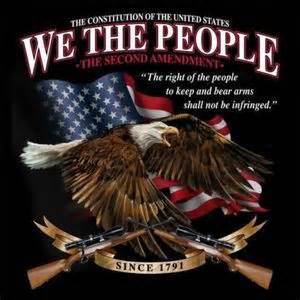 The North Carolina case Britt v. North Carolina serves as a breakthrough precedent for North Carolinians who lost their right to bear arms due to felony charges. In 1979, Barney Britt plead guilty to PWISD methaqualone (possession with intent to sell and deliver–a central nervous system depressant). He was sentenced to 4 months in prison and probation thereafter. At the end of his sentence in 1987, Mr. Britt’s rights as a North Carolina citizen were fully restored, including the right to bear arms. In 2004, N.C.G.S. §14-415.1 declared it unlawful for any felon to bear any type of firearm despite their reason. Britt sued the state arguing that this new law was unconstitutional. After several hearings and appeals, his case was taken to the Supreme Court where the jury ruled in Britt’s favor. Arguably, Britt served his sentence as a convicted nonviolent felon, and 30 years later had not committed any crime despite that he possessed firearms. Ultimately, Britt had “affirmatively demonstrated that he is not among the class of citizens who pose a threat to public peace and safety” and therefore, a regulation that prohibited him from possessing a firearm could not be “fairly related to the preservation of public peace and safety.”