
Restraining Orders / No-Contact Orders in North Carolina
Wednesday, September 25th, 2013 A restraining order or a protective order is a court order, that is a form or an injunction, that requires a party (a person) to do, or to refrain from doing, certain things. A party that refuses to comply with an order may face criminal or civil penalties, and may be ordered to pay damages or be subject to other sanctions such as a term of imprisonment. If a person violates the terms of a court order, they could be in serious criminal trouble and possibly face jail time.
The legal definition of domestic violence in NC is when someone with whom you have had a personal relationship attempts or intentionally causes bodily injury to one or ones minor child. The complaint form provides the plaintiff allege (and would need to prove to prevail) that the Defendant: attempted to cause or has intentionally caused bodily injury to the child(ren) living with me or in my custody; has placed my child(ren) in fear of imminent serious bodily injury or in fear of continued harassment that rises to such a level as to inflict substantial emotional distress. The term “personal relationship” means a relationship wherein the parties involved: (1) Are current or former spouses; (2) Are persons of opposite sex who live together or have lived together; (3) Are related as parents and children, including others acting in loco parentis to a minor child, or as grandparents and grandchildren. For purposes of this subdivision, an aggrieved party may not obtain an order of protection against a child or grandchild under the age of 16; (4) Have a child in common; (5) Are current or former household members; (6) Are persons of the opposite sex who are in a dating relationship or have been in a dating relationship. For purposes of this subdivision, a dating relationship is one wherein the parties are romantically involved over time and on a continuous basis during the course of the relationship. A casual acquaintance or ordinary fraternization between persons in a business or social context is not a dating relationship.
There are two different types of Domestic Violence Protective Orders (DVPO’s) that one can receive. The first is the ex parte/ temporary protective order and this is typically given to an alleged victim, or plaintiff, the day one files for a restraining order if the judge believes that the issue is serious and the party needs it immediately. In order to receive a full protective order there must be a trial with the plaintiff and the alleged offender, or defendant, present and the order can’t go into effect until the defendant has a copy of the order.
A DVPO can order the defendant not to assault, threaten, abuse, follow or harass the plaintiff or the plaintiff’s children at work, school, or in person either face to face, or over the telephone. A DVPO can allow the plaintiff to remain in the home where the defendant and plaintiff lived together, and force the defendant to move out no matter who is the home owner or who is on the lease. If someone wants to file for an order of protection, they can either do so in the county where they live, or where the defendant lives temporary or permanently.
Another type of Civil No-Contact Order in NC is provided under NCGS 50C. Civil no contact orders are an order of protection given to you from a judge. Anyone who alleges they are a victim of sexual assault or sexual abuse, or a victim of stalking, can apply for an order. The legal definition of stalking is when someone repeatedly follows or harasses one with the intent to put one in reasonable fear for you or your family’s safety, or attempting to cause emotional distress. In order to prevail, a plaintiff must prove that the defendant has followed on more than one occasion or otherwise tormented, terrorized, or terrified the plaintiff with the intent to place the plaintiff in reasonable fear for the plaintiff’s safety or the safety of the plaintiff’s immediate family or close personal associates or with the intent to cause, and which did cause, the plaintiff to suffer substantial emotional distress by placing the plaintiff in fear of death, bodily injury, or continued torment or terror.
As with DVPO’s, there are two types of civil no contact orders: an ex parte / temporary order, and a “permanent” order which typically only lasts one year, but can be extended. The temporary order, if granted, is typically given to one the day one files their complaint and can last up to ten days until the court can hold a trial with the alleged stalker and victim present. After the judge has time to review the case they have to find as fact that the stalking or sexual conduct occurred, and if so they should rule in the plaintiff’s favor and then grant the one year final order. The permanent (for one year) order is given after the court has a full hearing on the trial with both sides giving their evidence. A permanent order can last up to a year and may receive extension if it is brought to the court before the expiration date.
A civil no contact order can order the defendant to refrain from assaulting, molesting, or otherwise interfering with the plaintiff in any manner. It can order the respondent to refrain from contacting the plaintiff via email, telephone, or any electronic way. As with a DVPO, if one wants to file for a civil no contact order one can either visit the district county court where one resides, the district county court where the respondent resides, or one can also visit the district county court where the action took place.
If you have been served with a notice of hearing for a restraining order, or if you are considering pursuing a restraining order against someone who has committed acts which would justify a court granting a restraining order against someone who has attacked or assaulted you, call Collins Law Firm for a confidential consultation at: 910-793-9000
By Dan Werner, Intern
 Job security is always an aspect to consider when choosing a job or career path, especially with a sloping economy. Economists are predicting that over the next fifteen years certain jobs in the medical field such as nurses and nursing assistants will become in short supply, which will increase the demand for such jobs. There are many different certifications and licenses you may receive within this targeted medical field such as becoming a registered nurse, a certified nursing assistant, a licensed practical nurse, along with many more. Persons in the health care field have a very emotional job as they work with those who are sick and ill. As they work with those, who many times cannot take care of themselves, sometimes questions and allegations arise as they help others’ loved ones.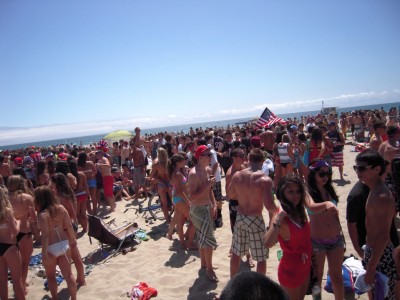

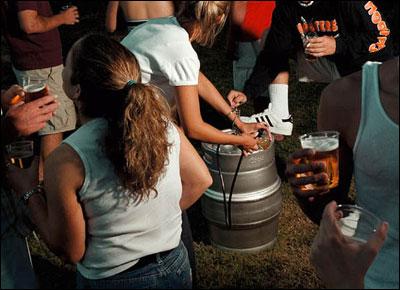 The Wilmington Star News – the primary printed news publication in New Hanover County North Carolina reported on recent efforts by law enforcement to promote adherence to the state’s underage drinking laws.
 This upcoming weekend is Memorial Day Weekend. While Memorial Day is a day to remember and honor those who lost their lives while serving our country in the United States Armed Forces, many take this longer weekend as an opportunity to travel.
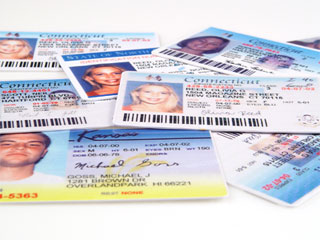 Southeastern North Carolina is an attractive area for young people to attend school either at UNCW or Cape Fear Community College. Of course, the same young people also enjoy to live, work, play, and party for which our beaches and downtown areas provide a wide array of opportunities. However, much of the nightlife requires patrons to be 21 years of age. For this reason, many youngsters either purchase fake IDs online or look to friends who are of age to use their IDs.
 While the Easter holiday is traditionally not a heavy traffic weekend, this spring’s decrease in gas prices and predictions of pleasant weather for this Easter weekend may impact travel. In addition, many North Carolina schools are on spring break contributing to traffic congestion.
 This weekend, on March 17, we will be celebrating Saint Patrick’s Day which is a cultural and religious holiday. Saint Patrick (AD 385–461), after whom this holiday is named, is the most commonly recognized of the patron saints of Ireland.
 Our nation has faced some difficult economic times as of late. In North Carolina, these trying times have left over 400,000 unemployed and unsure of how they will be providing for themselves and their families. The unemployment rate for young North Carolinians (ages 20-24) more than doubled between 2007 and 2011—the second highest jump in the nation. North Carolina joined six other states in 2012 to combat this growing trend in a network which emerged as a result of the Pathways to Prosperity Report by the Harvard Graduate School of Education.
 Motor vehicle crashes are the leading cause of death among those age 5-34 in the U.S. More than 2.3 million drivers and passengers were treated in emergency departments as the result of being injured in motor vehicle crashes in 2009. Seat belt use and proper child restraint are the most effective ways to save lives and reduce injuries in crashes, yet millions of adults do not wear their seat belts and fail to properly secure their children on every car ride. Many of these deaths and injuries can be prevented. Placing children in age- and size-appropriate car seats and booster seats reduces serious and fatal injuries by more than half.